Sustainability · Environment
Water, land and what is handed back.
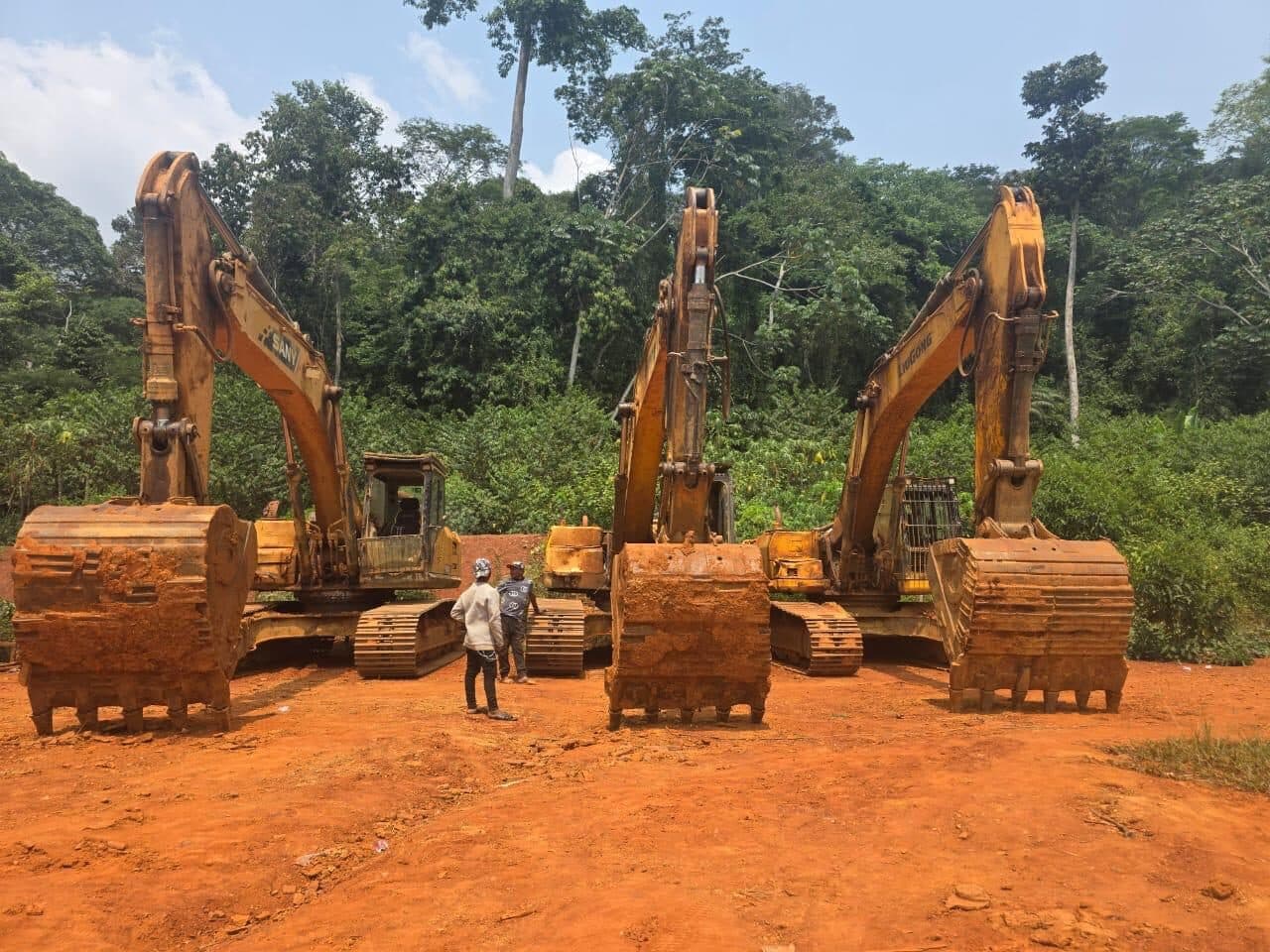
BYM's sites are hydraulic open-cuts and mechanised excavations. Both move earth and water in volume, so environmental practice is about controlling water, keeping sediment and fuel out of streams, and putting ground back as the pit advances.
The method
A simple process, designed around water.
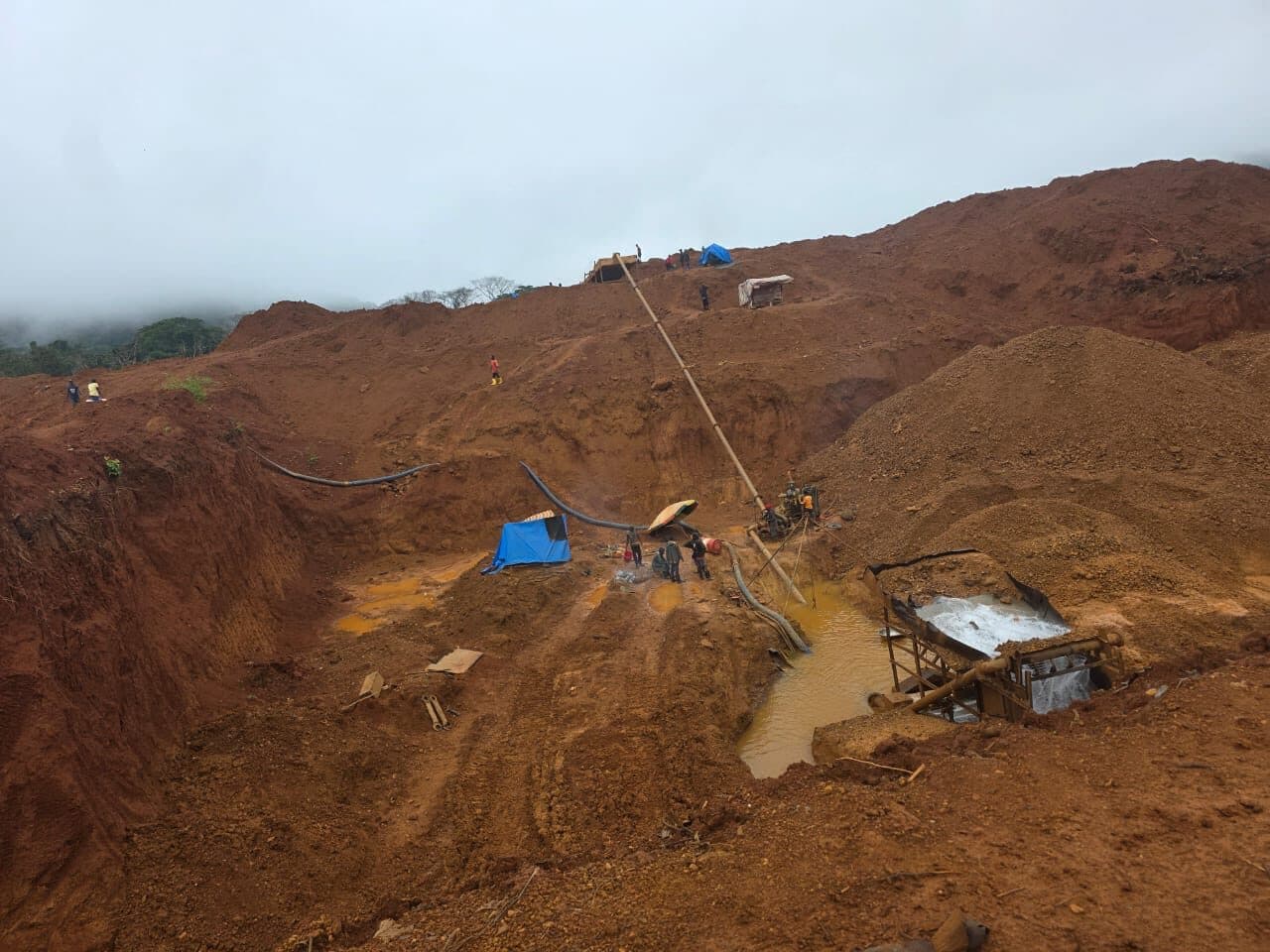
At Bavidili, water is pumped to the working face, where it breaks down the laterite bench. The slurry runs to a sluice at the base of the pit, and gold is recovered by gravity. At Beni, hydraulic excavators strip overburden and feed material to the processing circuit.
In both cases the processing is mechanical. What matters environmentally is where the water comes from, what it carries when it leaves, and what the ground looks like once a bench has been worked out.
The practices below describe what is done, or planned, at a site of this kind. They are the operating standard BYM sets for its cooperative partners and its own supervisors, and they are written into site planning before equipment is deployed.
BYM does not publish environmental monitoring data at this stage. Site plans and practice notes can be shared with partners on request.
Practices
Four things done at every working bench.
- 01
Water supply and recirculation
Hydraulic mining uses water to break down the laterite and carry it to the sluice. Water is drawn from the site, directed through the working face and sluice, and returned to retention and sediment ponds so that it can be pumped again rather than drawn fresh.
- 02
Sediment control before discharge
Slurry leaving the sluice is held in settling ponds so that fine material drops out before any water leaves the site. Ponds are cleaned out and re-cut as the working face advances, and discharge points are kept away from streams used by neighbouring villages.
- 03
Fuel, waste and workshop housekeeping
Excavators, pumps and generators run on diesel stored on site. Fuel is kept in a contained area with absorbent material on hand; used oil, filters and parts from on-site maintenance are collected and kept apart from general waste until they can be removed.
- 04
Progressive backfilling and re-vegetation
Overburden stripped from a new bench is placed back into benches that have been worked out. Backfilled ground is graded, topsoil is replaced where it was set aside, and the surface is left to re-vegetate or is planted, so that rehabilitation moves with the pit rather than waiting for closure.
Mining cycle
Rehabilitation is a phase of the work, not an afterthought.
- 01 · Exploration
- Surveys, sampling and assessment within licensed concession areas.
- 02 · Development
- Site preparation, infrastructure, equipment deployment and workforce mobilisation.
- 03 · Production
- Excavation, processing, gold recovery and quality assurance for delivery.
- 04 · Rehabilitation
- Progressive land restoration and community transition planning.